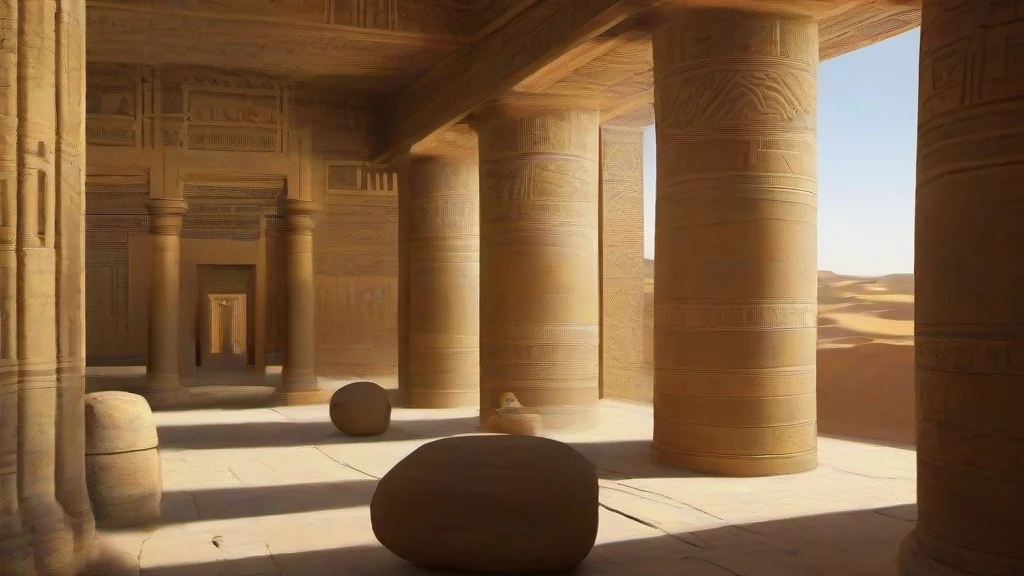
The sandstone walls of the Shrine of Taharqa, built around 2,700 years ago in Kawa in present-day northern Sudan, will appear in color again through digital projections at Oxford’s Ashmolean Museum. The display is due to begin on November 13, bringing out hues that have faded over time from the shrine’s carved scenes.
Constructed from 236 sandstone blocks inside a temple to Amun-Ra, the shrine was commissioned by Taharqa, who ruled Egypt and Kush from 690 B.C.E. to 664 B.C.E. Its carvings depict the pharaoh making offerings to gods and exercising his authority. Researchers believe the scenes were originally covered with plaster and painted, but when British archaeologists excavated the structure in the 1930s, its carvings were largely intact and appeared colorless.
To investigate the original decoration, researchers used infrared and hyperspectral imaging to find pigment traces that are difficult to see with the naked eye. Their findings include Egyptian blue, often used for depictions of prominent royals and deities, as well as traces of yellow and red.
The carvings also show Taharqa in different roles: as an Egyptian pharaoh wearing the double crown of Upper and Lower Egypt, and as a Kushite king represented with a ram’s head and cobras. Some scenes recount the shrine’s origins, including Taharqa’s visit to the partly buried remains of an earlier temple and his vow to restore it.
The Ashmolean describes the shrine as the only free-standing pharaonic building in Britain. Its projection will be accompanied by two newly produced films about the monument and its journey from Sudan to England in the 1930s. Museum records say the Sudanese government gave the shrine to Oxford in recognition of Egyptologist Francis Llewellyn Griffith’s archaeological work in the region.
Griffith’s team dismantled the shrine and packed it into 200 wooden crates, which were transported by barge along the Nile and then by train to the Red Sea before the final sea journey to England. The projection will offer visitors a view of the monument’s painted decoration informed by the surviving pigment evidence.
Sources: Smithsonian Magazine.